“…fa come natura face in foco”
Glass artists at the Padiglione Venezia
Giardini della Biennale June 7 – November 22 2009
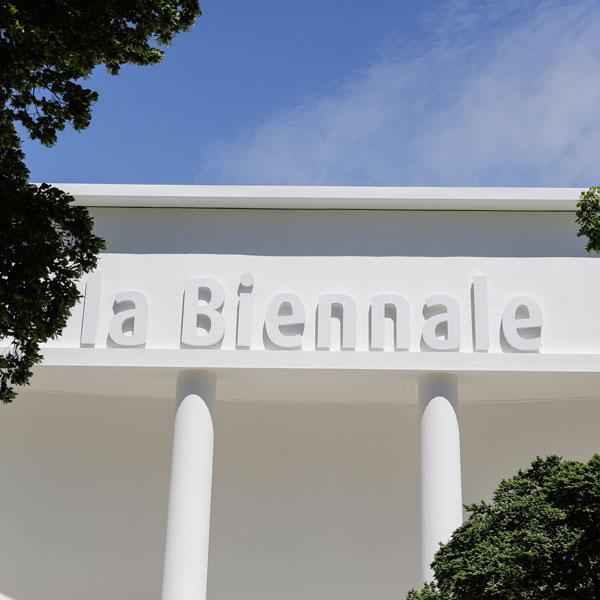
During the 53rd International Art Exhibition of the Biennale di Venezia, from June 7 through November 22, the Padiglione Venezia (at the Giardini) will host the exhibition …fa come natura face in foco dedicated to contemporary artists working in glass, with the support of the Regione del Veneto and curated by Ferruccio Franzoia.
In this way, the Regione del Veneto intends to underline the importance of Murano glass as a means of artistic expression, renowned throughout the world, and its return to the Padiglione Venezia, from which it had been absent since 1972, its historic home built in 1932 with the purpose of representing the decorative arts of the region at the Biennale.
For forty years, the Padiglione Venezia provided the most qualified showcase for the research and experimentation of the major glass artists. The exhibition …fa come natura face in foco intends to take up where this great tradition left off, highlighting a capacity for renovation that is far from dying out. Their initiation into a world of ancient skills continues to shape the work of many authors from Italy and abroad, and their experimentation is what the display at the Padiglione Venezia intends to document.
The exhibition unwinds through the portico of the Padiglione Venezia with the works of nine of the most interesting artists on the international glass scene: Cristiano Bianchin, Alessandro and Laura Diaz de Santillana, Yoichi Ohira, Ritsue Mishima, Maria Grazia Rosin, Lino Tagliapietra. At the center, a tribute to Toni Zuccheri, recently passed away. In the outdoor garden, a large installation by artist Dale Chihuly, made especially for the Biennale.
The Hall of memory is a tribute to the past, and is dedicated to thirty historic pieces made in the furnaces of Murano between the Twenties and the Sixties, borrowed from important private collections and never exhibited before. On display are the blown glass pieces by Vittorio Zecchin designed for Cappellin Venini & C. in the early Twenties, then the best of Venini with a group of vases designed by Carlo Scarpa in the late Thirties. There are masterpieces in “pulegoso” glass by Napoleone Martinuzzi and a vase by Ercole Barovier in “primavera” glass. The postwar period is represented by historic works by Flavio Poli, Archimede Seguso, Vinicio Vianello and Dino Martens.
A curtain stretched across half the room demarcates and evokes the Murano of the past, to be preserved in memory, distinct from the latest works by the new protagonists of glass art.
The exhibition will be accompanied by the catalog published by Marsilio and edited by Marco Arosio.
The Artists
Biographical Notes
Cristiano Bianchin
Born in 1963 in Venice, where he graduated in painting from the Academy of Fine Arts in 1987. In 1992 he made his first pieces in glass for a joint exhibition at the Fondazione Bevilacqua La Masa. He shows regularly in Italy and the United States: his glass is often combined with works made from knitted hemp.
Dale Chihuly
Born in Tacoma, USA, in 1941. After studying at the Rhode Island School of Design, he was invited by Ludovico Diaz de Santillana to Murano, where he learned the techniques of glassmaking at Venini. In 1971 he opened the Pilchuck Glass School nearSeattle, where he works and invites glassmakers from Murano to come and teach, in particular Lino Tagliapietra. He is famous for his creations on a large scale, made up of hundreds of phytomorphic elements, which are often used to illuminate public spaces or submerged in pools of water.
Alessandro Diaz de Santillana
Born in Paris in 1959. Like his sister, he designed lamps and other objects for the family firm, Venini. He started to show as an independent artist in 1992. His sensibility has led him to combine glass with iron, bronze and most recently lacquer in large sculptures. He now lives in Venice after a long period of teaching and work in America.
Laura Diaz de Santillana
Born in Venice in 1955. The granddaughter of Paolo Venini, she worked for the family firm until 1986, designing various collections of objects. Appointed artistic director of the Eos glassworks, she has subsequently devoted herself to the creation of one-off pieces not just on Murano but in America too. Her glass is on display in the world’s most prestigious galleries.
Ritsue Mishima
Born in Kyoto, Japan, in 1962. In 1989 she moved to Venice, where she began to create objects in heavy clear glass in 1996. She exhibits regularly in Italy, Japan, the Netherlands and Great Britain.
Yochi Ohira
Born in Japan in 1946. He moved to Italy in 1973, graduating in sculpture from the Academy of Fine Arts in Venice. The same year he started to collaborate with Egidio Costantini’s
Fucina degli Angeli glassworks. In 1987 he worked as a designer of blown glass at the De Majo glassworks on Murano. Since the beginning of the nineties he has been creating one-off pieces independently at the Anfora glassworks.
Maria Grazia Rosin
Born at Cortina d’Ampezzo (Belluno) and lives and works in Venice and Milan. She attended art college at Cortina and in Venice took several courses at the department of architecture before graduating under Emilio Vedova from the Academy of Fine Arts in 1983. In 2007 a major exhibition of her works was staged at Palazzo Fortuny in Venice.
Lino Tagliapietra
Born on Murano in 1934. Showing precocious talent, he started work in the furnace with Archimede Seguso. In 1976 he became the artistic director of the EffeTre glassworks. In the same years he collaborated with artists overseas, first at the Pilchuck Glass School in Seattle and then the
Haystack Mountain School of Crafts and the Centre International de Recherche sur le Verre in Marseilles. His glass can be seen at some the world’s most important museums.
Toni Zuccheri (1937-2008)
He studied at the department of architecture in Venice, where his teachers were Gardella, Albini and Scarpa. He collaborated with Giò Ponti on stained-glass windows in Milan and Padua. From the sixties onward he designed innumerable objects for Venini, inventing new colors. He inherited from his painter father a passion for animals, which he made not only out of glass on Murano, but also in bronze and by assembling wood, wax, painted plaster and sheet metal. One-off pieces shown for the first time at the Venice Biennale.
…fa come natura face in foco
Dante
In the 1930’s, the Padiglione Venezia was the venue for the international decorative Arts section that was “reserved to some products from the typical Venetian tradition”.
This meant glass, fabrics, pure enamels and lacquers.
In the presentation to the catalogue of the 1934 Biennale, history imposed a factor that resonates in today’s economic crisis.
“To acquire the conviction that all contemporary activities are represented in this little pavilion it is important to consider the years of economic crisis we are going through. These times are inevitably detrimental to the decorative arts, which at the height of their excellence mean luxury and sophistication.”
The author of these considerations was Pietro Chiesa, who curated “the installation” in the pavilion; shortly thereafter he formulated aesthetic concepts that contrasted sharply with the theses that heralded, internationally, the development of what would later be called design. Incidentally, Pietro Chiesa was responsible for the artistic direction of Fontana Arte together with Gio Ponti.
At that time the Padiglione Venezia exhibited objects that came from Austria, Belgium, Czechoslovakia, France (solid crystal pieces created by the Cristalleries Baccarat), from Germany and Italy. If we restrict our field to “glass art”, it is important to mention the vases and bowls by A.V.E.M., the amphorae and flowers from the Vetreria Barovier, the necklaces made of beads by Cavalieri Alice, the glass rods and roosters by Moretti Ulderico & C. and the pieces by Pedrocco Lavinio or by Ferro Toso & C., or by Andrea Rioda. Or the engravings on glass by S.A.L.I.R., the simple pieces made of iridized ‘paglierino’ amber glass by Salviati & C:, the small handbags in Venetian glass beads by the Società Veneziana per l’Industria delle Conterie, the vases by Fratelli Toso, the heavy glass pieces by Venini, and again the new vases and bowls by Zecchin & Martinuzzi or by Barovier-Seguso & Ferro.
A driving force that has not completely died out yet. The initiation into a world of ancient skills continues, despite the complexity of paths and interests, to shape the work of many authors from Italy and abroad. It is this “creative space” that, in concert with the theme of Making Worlds proposed by the Director of the 53.International Art Exhibition, Daniel Birnbaum, the Padiglione Venezia intends to document. The exhibition will open with a brief selection of modern works made in the furnaces of Murano. With no intention of presenting an organic unity, as suggestion and memory they introduce the creations of: Cristiano Bianchin, Lino Tagliapietra, Alessandro and Laura Diaz de Santillana, Maria Grazia Rosin, Ritsue Mishima and Yoichi Ohira, “exempla” of the boundless technical and formal experimentation that has always characterized glass art. We also felt that an affectionate promenade through the ornithological fantasies of Toni Zuccheri was a just tribute to the recently deceased artist from the Veneto and that the fantastic phyto-morphological world of Dale Chihuly would find appropriate resonance in the attention dedicated to it by the 53.International Art Exhibition.
Ferruccio Franzoia, curator of the exhibition