LA FINESTRA SUL LUNA PARK (The Window to Luna Park) (90’)
by Luigi Comencini
starring Giulia Rubini, Gastone Renzelli, Giancarlo Damiani, Pierre Trabaud, Calina Classy
Italy, 1957
Restored in 2025 by Cineteca di Bologna
with the collaboration of Surf Film, in the laboratories of L’Immagine Ritrovata
Introduced by Marco Bertozzi
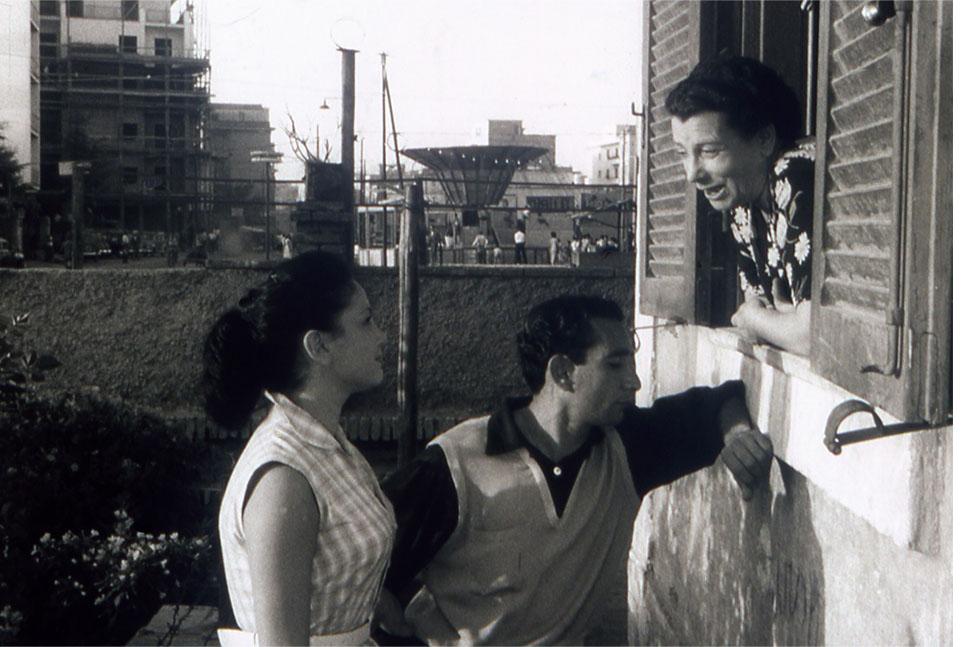
A commercial failure on its release, La finestra sul Luna Park is one of the hidden masterpieces of 1950s Italian cinema and the most personal of the films Comencini made during that decade. Aldo, a labourer who has emigrated, returns home following the death of his wife and attempts to rebuild a relationship with his son Mario who, during his absence, had found a substitute father-figure in the very different Righetto, a weak and mild-mannered member of the underclass. Righetto lives day-to-day, but is able to offer the child the kind of affection he cannot find elsewhere (“The little I earn is enough for me,” he says, “Why should I work more if it would deprive me of time I can spend with Mario?”). It is the vision of this different model of emotional relationship that opens Aldo’s eyes: he brings to mind the protagonist of another film made that same year, Antonioni’s Il grido, played by one of the non-professional actors from Visconti’s Bellissima, Gastone Renzelli. The film is structured as a low key, everyday “horizontal” male weepie. Aldo wanders through the new districts of Rome, often holding his son’s hand like in Bicycle Thieves, in an attempt to reclaim spaces that were dramatically transformed while he was away. The end result is a coming-of-age story focusing not on a child, but on an adult who learns to let go of his identity as a working class male with bourgeois aspirations when confronted by a son drawn to a member of an underclass that lacks his work ethic and to a “feminine” model of paternity. At the threshold of the economic miracle, Comencini presents us with a point of entry into affluence which does not sacrifice the warmth of ordinary people and of children. (Emiliano Morreale)