Historical Archive -
Ca’ Giustinian hosts the exhibition Man Ray, l’immagine ritrovata
A tribute to the artist fifty years after the Biennale Arte 1976. The exhibition is open at Ca’ Giustinian, the headquarters of La Biennale di Venezia (9 am - 7 pm daily, free admission).
Man Ray, l’immagine ritrovata
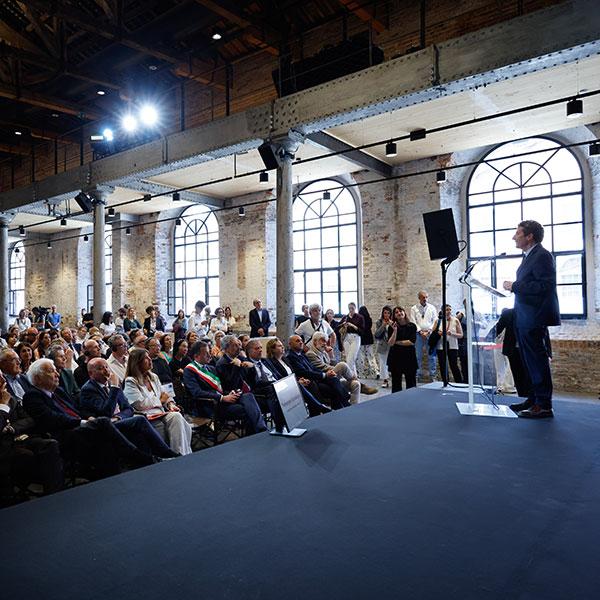
Fifty years after the Biennale Arte 1976, La Biennale di Venezia presents the exhibition Man Ray, l’immagine ritrovata, taking place at the Portego di Ca’ Giustinian, headquarters of La Biennale di Venezia. The opening took place on Friday, 6 February, at 12 noon.
As a tribute to the artist, the exhibition showcases the photographic collection from the historic 1976 exhibition Man Ray. Testimony through Photography, held from July 18 to October 10 on the island of San Giorgio Maggiore in Venice. Curated by Janus, it was part of the Biennale Arte Environment, Participation, Cultural Structures under the direction of Vittorio Gregotti.
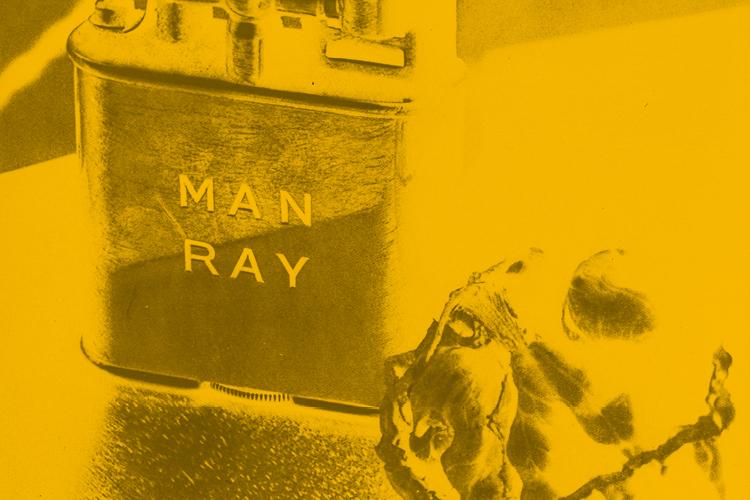
The initiative restores the context and significance of an important exhibition project donated by Man Ray to La Biennale di Venezia, which over time has become one of the most consulted collections of the Historical Archive of Contemporary Arts. The exhibition path is enriched with a selection of materials preserved in the Historical Archive, including photographs, documents, and working materials of Man Ray, key figure in Dadaism and Surrealism.
Produced by the Historical Archive of Contemporary Arts of La Biennale, the exhibition will be complemented by a workshop during which, nearly fifty years after the first edition, a facsimile of the historic catalog will be presented. Published by La Biennale di Venezia, this edition is enriched with new texts, essays, and iconographic materials. The updated edition broadens the critical perspective of the volume and renews its role as a research tool, offering a contemporary reading of Man Ray’s contribution to the history of photography.
The Historical Archive – International Research Centre for Contemporary Arts of La Biennale di Venezia aims to enhance and reactivate the artist’s legacy. In doing so, it reaffirms its mission as a dynamic and open institution, dedicated to the promotion of research, the preservation and enhancement of artists’ legacies, and their accessibility to scholars, students, and researchers. Within this framework falls the Archive’s new headquarters, currently under development at the Arsenale, whose inauguration is scheduled for June 2026.
The exhibition of 1976
The exhibition Man Ray. Testimony through Photography, curated by Janus and presented at the Biennale Arte 1976, brought together 160 black-and-white photographs donated by the artist to the Historical Archive of Contemporary Artsof La Biennale, covering the entire span of his photographic career, from his beginnings in 1917 to his most recent works.
The exhibition saw the direct participation of Man Ray, who, despite serious health issues and his inability to travel, closely followed the project with great attention and involvement. The works on display included prints made from original negatives, photographic reproductions of original photographs, and materials drawn from books, catalogs, and publications dedicated to the artist, as well as images of works he himself had created. This curatorial choice recognized reproduction not only as a documentary tool but also as a conceptual one. The exhibition thus did not take the form of a traditional retrospective, but rather offered a structured reflection on the multiple functions of photography and its expressive potential within Man Ray’s work.
Janus, the exhibition’s curator, was a journalist, historian, and art critic. He closely followed the artist’s activity and dedicated numerous exhibitions to him in Italy and abroad, including Turin (1969), Ferrara (1972), New York (1974), Paris (1974), Milan (1977), Stuttgart (1998), and Lucca (2009).
The catalogue
In 1977, one year after the exhibition, the monographic catalog Man Ray. L’immagine fotografica, edited by Janus and published by La Biennale di Venezia, was released. The volume—of which a facsimile edition will be produced—opens with an introduction by Carlo Ripa di Meana, then President of the Biennale, and includes a critical essay by Janus, along with contributions by key figures of the historical avant-gardes, including Tristan Tzara, André Breton, and Marcel Duchamp. The publication brings together 160 reproductions of the works presented in the exhibition, accompanied by a selection of documents and working materials by Man Ray, and immediately established itself as a reference tool for the study of his photographic practice.
Biography
Emmanuel Radnitzky (1890–1976), better known as Man Ray, was born in the United States into a Jewish family of Russian origin. He adopted his pseudonym in 1909 after moving to New York, where he became involved in art and avant-garde circles and came into contact with figures such as Marcel Duchamp. In 1921, after relocating to Paris, Man Ray devoted himself primarily to photography, developing the celebrated rayographs—images created without a camera by placing objects directly onto photosensitive paper. He remained in Paris until 1940, exhibiting both in Europe and the United States.
Following the outbreak of the Second World War, he moved to Los Angeles, before returning to Paris in 1951, where he lived until his death in 1976. Man Ray was among the first to theorize a new language of photography and cinema, positioning them as tools of artistic practice. His career, marked by experimentation and versatility, established him as a leading figure in the artistic scene of the first half of the twentieth century, as well as a representative of American Dada and Surrealism.
Exhibitions at the Portego of Ca’ Giustinian
Since 2010, the following exhibitions have been held in the Portego of La Biennale headquarters at Ca' Giustinian:
La Biennale di Venezia 1979-1980. The Theatre of the World "singular building". Tribute to Aldo Rossi; Italy: 150 / Biennale: 116. The posters of 116 years of life; Video Medium Intermedium - emerging video art in Europe in the early 1970s; The “Archi” by Aldo Rossi for the 3rd International Architecture Exhibition 1985; 20 years of Masks and Costumes - an exhibition from the collection of the theatrical sketches of the ASAC; Amarcord. Fragments of memory - Featuring materials from the Historical Archives of La Biennale; Riapparizioni. Corpi, gesti, sguardi dai palcoscenici della Biennale. Album 1934-1976; The Idea of the Body: Merce Cunningham, Steve Paxton, Julian Beck, Meredith Monk, and Simone Forti from La Biennale Archives 1960/1976; Exhibition of photos, videos, posters; 1999 - re-launch of the Biennale Art Exhibition entitled dAPERTutto (48th International Art Exhibition of La Biennale di Venezia); Exhibition Biennale Arte 2001 - Platea dell'Umanità: the archival version of the 49th International Art Exhibition, titled Plateau of Humankind; Registe alla Biennale Teatro 1934 – 2016; Il Cinema in Mostra. Volti e immagini dalla Mostra Internazionale d’Arte Cinematografica 1932 – 2018; La Biennale per i giovani. College ed Educational 2008-2018; Le muse inquiete (The Disquieted Muses). When La Biennale di Venezia Meets History; Archèus. Labirinto Mozart, an immersive installation by Ophicina and Damiano Michieletto, a special project by the Historical Archives of La Biennale for the 1600th anniversary of the foundation of Venice; Carnival breaks through the fog: Venice, Scaparro, La Biennale 1980, 1981, 1982, 2006 from the Archives of La Biennale di Venezia; 1932: The first Venice International Film Festival from the Archive of La Biennale di Venezia; B74-78. Lorenzo Capellini. Un racconto fotografico; Luca Massimo Barbero. Un Diavolo Amico; Iconoclasts. Women Rule Breakers at Biennale Danza.