Restored masterpieces by Buñuel, Cassavetes, Ciprì and Maresco, Corman, Hui, Kluge, Lubitsch, Polanski, Rossellini, Scola, Wajda and others.
Cinema -
The Venice Classics restored films at the 83rd Venice Film Festival
Director Daniele Vicari President of the Jury of film students.
Venice Classics
The line-up has been finalised for the Venice Classics section of the 83rd Venice International Film Festival of La Biennale di Venezia, which presents the world premiere screenings of 19 film restorations of masterpieces completed over the past year from film libraries, cultural institution and productions around the world.
Festival’s Artistic Director Alberto Barbera declared: “Nostalgia is not the underlying reason behind a section like Venice Classics. If the goal consists in remembering the vitality back when “cinema was everything” (to borrow the words of Leonardo Sciascia), another consideration also comes to the fore: the awareness that the cinema of tomorrow can only be nourished by the lifeblood of the films of the past. A vivid imagery made of great and unforgettable masterpieces that are only waiting to be revisited, and movies that are to some extent forgotten and that, instead, need to be carefully reconsidered.
The Festival begins with a fitting tribute to a director who, for too long, was misunderstood if not downright thwarted: Tinto Brass and his film Col cuore in gola (Deadly Sweet), a pop tribute to the London of the 1960’s, made with the collaboration of Guido Crepax. A film that was “resuscitated” is Lo zio di Brooklyn (The Uncle from Brooklyn) by Ciprì and Maresco; it disappeared from the cinemas after the negative parenthesis of its almost clandestine release in Italy but Aurelio De Laurentiis has generously agreed to bring it back into the light. One of Ettore Scola’s most eccentric and least-seen films, Brutti, sporchi e cattivi (Ugly, Dirty and Bad), doubtless deserves a careful re-evaluation, while Viaggio in Italia (Journey to Italy) by Roberto Rossellini has long been considered one of his masterpieces, after the initial hostility of movie critics. Italy’s squad concludes with La lunga notte del ’43 (Long Night in ’43), the first movie by Florestano Vancini and, according to many, his most intense and successful film.
The word ‘masterpiece’ inevitably comes up when considering the film To Be or Not to Be by Ernst Lubitsch; in the middle of World War II, he turned to Shakespeare to create the most ferocious and irresistibly funny satire about Nazism. Two other important, restored movies also come from the United States: The Wild Angels by Roger Corman, the highly prolific director’s biggest commercial success, presented in competition at the 1966 Venice Film Festival, and Minnie and Moskowitz by the unforgettable John Cassavetes.
On more than one occasion, Martin Scorsese has called Ashes and Diamonds by Andrej Wajda one of his ten favorite movies; the forefather of the Polish nouvelle vague, Wajda was harshly criticized by the communist regime at the time. One of his disciples, Roman Polanski, rightly considers Cul-de-sac (which he made in England) his most successful film.
Alexander Kluge, who passed away a few months ago, received his first Silver Lion at the Venice Film Festival in 1966 for his debut movie Yesterday Girl, whereas the Czechoslovakian Jaromil Jirés had more than a few problems with censors in various countries for his movie Valerie and Her Week of Wonders (“a charming kaleidoscope of witchcraft and hallucinations” – in the words of M. Morandini).
The remaining restorations offer a concise trip around the world: from Mexico, Illusion Travels by Streetcar, perhaps one of the least-seen movies directed by Luis Buñuel; equally little-known is the Argentinian film Those at Table 10 by Simón Feldman, which was never distributed in Italy but is considered one of the first and most important movies of the so-called Generation of the Sixties, the Argentinian nouvelle vague of the era. From Japan, another movie that deserves to be rediscovered is The Catch by the great director Shinji Sōmai. The first film by India’s Dev Bengal, English, August won the prize for Best Film at the Torino Film Festival in 1995; that same year and at that same festival, the Chinese director (who studied at the Centro Sperimentale di Cinematografia in Rome) Ning Ying gained appreciation with the second installment of her Beijing trilogy, On the Beat. The second part of a trilogy and one of the first political movies from Hong Kong is The Story of Woo Viet by Ann Hui, who tackles the drama of Vietnamese refugees in a city dominated by feelings of uncertainty over the future. To finish up, The Blue Eyes of Yonta by Flora Gomes, the second film by the director from Guinea-Bissau, who came to the fore a few years earlier at the Venice Film Festival with her debut movie Mortu Negra.”
Director Daniele Vicari will chair the Jury of Film Students which – for the thirteenth year – will award the Venice Classics prizes for the respective competitions for Best Restored Film. The Jury chaired will be composed of 24 students, each of them recommended by professors of film studies from various Italian universities, DAMS and from Ca' Foscari University in Venice.
Venice Classics is the section that since 2012 has presented at the Venice Film Festival a selection of the best restorations of film classics. Curated by Alberto Barbera with the collaboration of Federico Gironi.
Line-up
COL CUORE IN GOLA (DEADLY SWEET) – PRE-OPENING FILM
by TINTO BRASS (Italy, 1967, 105’, Colour)
restored by: Centro Sperimentale di Cinematografia – Cineteca Nazionale with the support of Netflix, in collaboration with Compass Film
ENGLISH, AUGUST
by DEV BENEGAL (India, 1994, 118’, Colour)
restored by: Film Heritage Foundation
LA ILUSIÓN VIAJA EN TRANVÍA (ILLUSION TRAVELS BY STREETCAR)
by LUIS BUÑUEL (Mexico, 1954, 83’, B/W)
restored by: Museo Nazionale del Cinema di Torino / Fundación Televisa / Cineteca Nacional México
MINNIE AND MOSKOWITZ
by JOHN CASSAVETES (USA, 1971, 116’, Colour)
restored by: Universal Pictures
LO ZIO DI BROOKLYN (THE UNCLE FROM BROOKLYN)
by DANIELE CIPRÌ, FRANCO MARESCO (Italy, 1995, 98’, B/W)
restored by: Fondazione Cineteca di Bologna, in collaboration with Filmauro
THE WILD ANGELS
by ROGER CORMAN (USA, 1966, 86’, Colour)
restored by: Amazon MGM Studios
LOS DE LA MESA 10 (THOSE AT TABLE 10)
by SIMÓN FELDMAN (Argentina, 1960, 83’, B/W)
restored by: Asociación Amigos Museo del Cine de Buenos Aires
UDJU AZUL DI YONTA (THE BLUE EYES OF YONTA)
by FLORA GOMES (Guinea-Bissau/Portugal/France/UK, 1992, 98’, Colour)
restored by: Cinemateca Portuguesa – Museu do Cinema
WOO YUET DIK GOO SI (THE STORY OF WOO VIET)
by ANN HUI (Hong Kong, 1981, 92’, Colour)
restored by: M Plus Museum Limited
VALERIE A TÝDEN DIVŮ (VALERIE AND HER WEEK OF WONDERS)
by JAROMIL JIREŠ (Czech Republic, 1970, 77’, Colour)
restored by: Národní filmový archiv
ABSCHIED VON GESTERN (YESTERDAY GIRL)
by ALEXANDER KLUGE (Germany, 1966, 88’, B/W)
restored by: Kairos-Film
TO BE OR NOT TO BE
by ERNST LUBITSCH (USA, 1942, 99’, B/W)
restored by: Studiocanal
MINJING GUSHI (ON THE BEAT)
by NING YING (China, 1995, 101’, Colour)
restored by: China Film Archive
CUL-DE-SAC
by ROMAN POLANSKI (UK, 1966, 112’, B/W)
restored by: Fixafilm
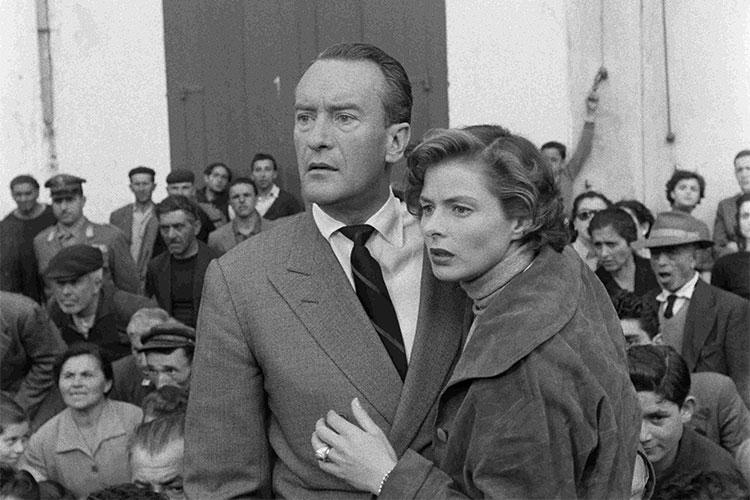
VIAGGIO IN ITALIA (JOURNEY TO ITALY)
by ROBERTO ROSSELLINI (Italy/France, 1953, 85’, B/W)
restored by: Cinecittà S.p.A.
BRUTTI, SPORCHI E CATTIVI (UGLY, DIRTY AND BAD)
by ETTORE SCOLA (Italy, 1976, 115’, Colour)
restored by: Centro Sperimentale di Cinematografia – Cineteca Nazionale / Cineteca di Bologna, in collaboration with Surf Film SRL
GYOEI NO MURE (THE CATCH)
by SHINJI SŌMAI (Japan, 1983, 140’, Colour)
restored by: Shochiku MediaWorX Inc.
LA LUNGA NOTTE DEL '43 (LONG NIGHT IN ’43)
by FLORESTANO VANCINI (Italy, 1960, 105’, B/W)
restored by: Fondazione Cineteca di Bologna, in collaboration with Compass Film
POPIÓŁ I DIAMENT (ASHES AND DIAMONDS)
by ANDRZEJ WAJDA (Poland, 1958, 104’, B/W)
restored by: Di Factory
Daniele Vicari – Biographical notes
After working as a film critic for many years and making numerous documentaries, Daniele Vicari debuted in fiction feature films with Velocità Massima (Maximum Velocity), in competition at the 59th Venice Film Festival and the winner of a David di Donatello for best new director. He next directed: L’orizzonte degli eventi, 2005, Semaine de la critique, Cannes 58; Il mio paese, 2006, Orizzonti Venice 63, David di Donatello best doc; Il passato è una terra straniera (The Past Is a Foreign Land), 2008, Rome Film Festival and Miami IFF; Diaz Don’t Clean Up This Blood, 2012, which won the audience award at Berlin 62; La Nave dolce (The Human Cargo), 2012, out-of-competition official selection at Venice 69; Sole cuore amore (Sun, Heart, Love), 2016 Rome Film Festival. Between 2017 and 2021, he made productions for TV. In 2020, he experimented with making movies in smart working, with Il Giorno e la notte (The Day and the Night). He returned to film with: Orlando, 2022, Torino Film Festival; Fela il mio dio vivente (Fela, My Living God), 2023 Rome Film Festival; Ammazzare stanca, autobiografia di un assassino (Killing is Exhausting), 2025, Spotlight Venice 82. In 2019, he published the novel Emanuele nella battaglia and in 2022, the essay Il cinema, l’immortale, both published by Einaudi. He is presently working on the adventure movie Bianco. He founded and directs the “Gian Maria Volonté” Film School.