| Year and length: | 2026, 65’ + 35’ (world premiere) |
|---|---|
| Concept: | Slava Tutukin, Marijn Rademaker, Ira Goldbecher |
| SCIROCCO - DEATH IN VENICE: | |
| Choreography: | Imre & Marne van Opstal, Omar Román De Jesús, Rainer Behr |
| Dramaturgy: | Ira Goldbecher |
| Music: | Ricardo Villalobos / Max Loderbauer / Mohammad Reza Mortazavi / Boxhead Ensemble (for Imre & Marne van Opstal), Jesse Scheinin (for Omar Román De Jesús), N.N. (for Rainer Behr) |
| Film directed and choreographed by: | Javier De Frutos |
| SCIROCCO - BRIDGE OF SIGHS: | |
| Concept and choreography: | John Neumeier |
| Music: | String quartet no. 13, Op. 138 by D. Šostakóvič, arr. A. Čajkovskij for viola and orchestra; Falling in Love Again by Friedrich Hollaender; September Song by Kurt Weill, sung by Bryan Ferry |
| Death in Venice / Bridge of Sighs: | |
| Costumes: | Boss |
| Light design: | Konstantin Binkin, John Neumeier |
| With: | Silvia Azzoni, Kayoko Everhart, Mara Galeazzi, Silas Henriksen, Igone de Jongh, Marijn Rademaker, Oleksandr Ryabko, Gil Roman, Diana Vishneva (WINNDance Company) |
| Production: | WINNDance Company |
| Co-production: | La Biennale di Venezia |
Dance
Winndance Company - Scirocco (Death in Venice + Bridge of Sighs)
Description
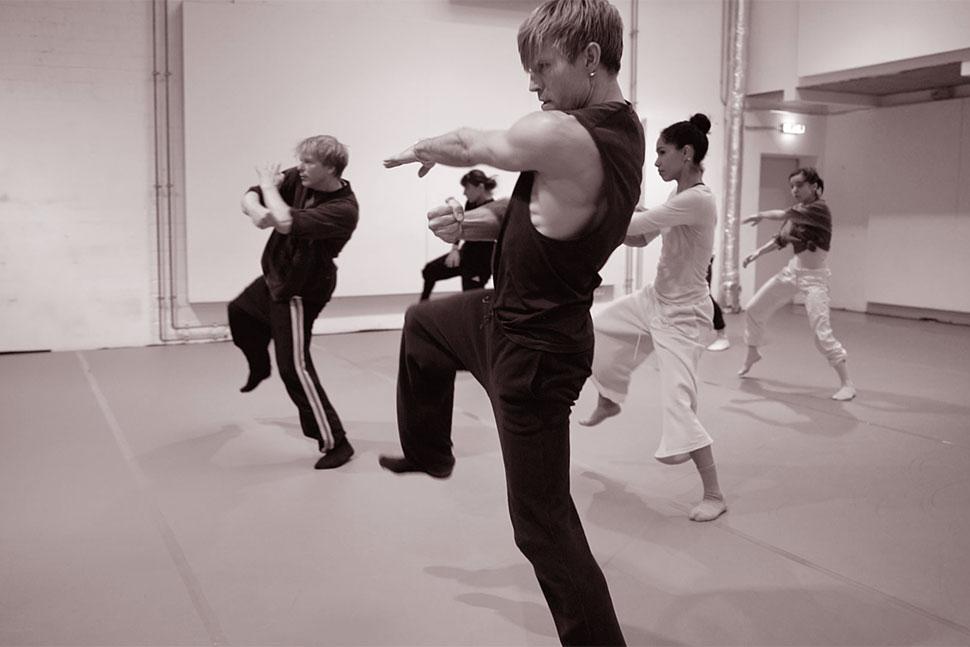
Scirocco consists of two chapters, Death in Venice and Bridge of Sighs, conceived by WINN Dance Company (When If Not Now), an ensemble of dancers over the age of forty whose careers have shaped contemporary dance internationally for decades.
In Death in Venice, the ageing writer Gustav von Aschenbach confronts an existential crisis, explored through an imagined inner dialogue with his creator. Film footage by Javier De Frutos provides the narrative framework, while choreographers Imre van Opstal, Marne van Opstal, Omar Román De Jesús and Rainer Behr translate inner conflict into movement.
The Bridge of Sighs, which lends its title to the second chapter of the diptych, evokes countless images for choreographer John Neumeier: a final glance at a beloved city, a lover’s farewell, the aching desire for an irretrievable past, and absence experienced as an intense presence. The dancers echo these images through a choreography that creates an emotional landscape suspended between past and present.