| CANTOS YORUBA DE CUBA: | 2025 (30’, world premiere) |
|---|---|
| Music by: | José Angel Navarro, Hector Angulo |
| Guitar and musical arrangements: | Walter Zanetti |
| EL DECAMERÓN NEGRO: | Music by José Angel Navarro, Héctor Angulo, Leo Brouwer |
| Guitar and musical arrangements: | Walter Zanetti |
| VITULA: | 2026 (40’, world premiere) |
| Voice, vitula (stringed instrument), live electronics: | Talullah Calderwood |
Music
Walter Zanetti - Cantos yoruba de Cuba / Biennale College: Talullah Calderwood - Vitula
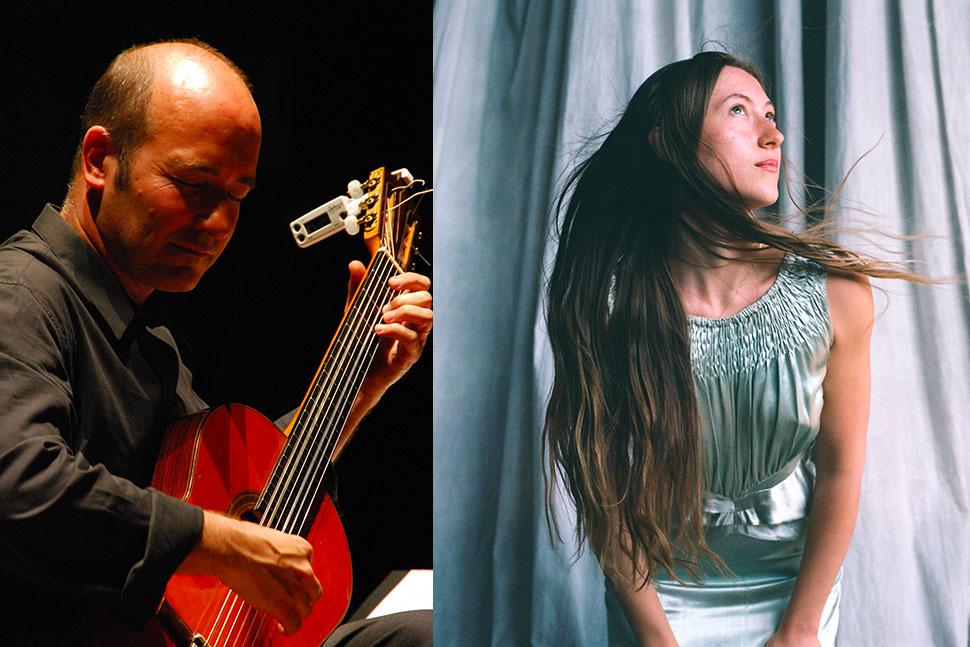
Cantos Yoruba de Cuba
Cantos Yoruba de Cuba, released on light-years in 2025, is the culmination of Walter Zanetti’s research into a distinctive repertoire of Cuban guitar music rooted in African traditions. The project emerged from Zanetti’s encounter with the Cuban musician José Ángel Navarro and a period of study in Güines, between Havana and Matanzas, where he immersed himself in the sound world of batá drums and the rituals of Santería. Learning directly from ceremonial percussionists and Navarro himself, he discovered an approach in which the guitar emulates a set of drums, reproducing the intricate textures of Afro-Cuban polyrhythm while sustaining a melodic line.
The first programme (14 October) brings together works by Héctor Angulo and José Ángel Navarro inspired by Yoruba melodies, Santería traditions, the figure of Ochún and the rhythmic structures of Cuban rumba.
For his second programme (15 October), Zanetti expands the programme with Leo Brouwer’s El Decamerón Negro (1981), a landmark composition inspired by African oral traditions that brings Afro-Cuban musical heritage into dialogue with one of the defining works of the modern classical guitar repertoire.
Vitula
Vitula is a new work for voice, electronics and a custom-built stringed instrument. Talullah Calderwood performs on vitula, a newly constructed instrument-sculpture whose name draws both from the Latin root of the violin and cello family and from Vitula, the Roman goddess of victory, associated with rituals of triumphant joy, song and sacrifice. The name also contains the artist’s childhood nickname, “Tula”, reflecting the hybrid formed by her voice, body and instrument.
Developed through Calderwood’s ongoing practice of instrument design, live performance and electronic composition, and inspired by myths of creation, the work traces a passage from primordial chaos towards increasingly defined structures.
Pairing the metal- stringed instrument with live processing in Pure Data, the work explores how compositional constraints become generative, bringing together the enduring practice of acoustic instrument-building with contemporary electronic systems.