| Year and length: | 2026, 150’ approx. (world premiere) |
|---|---|
| By: | Bertolt Brecht |
| Direction: | Marco Plini |
| With: | Chiara Baccarini, Beatrice Barizza, Pietro Bertoni, Alessia Carkanji, Gaia Curto, Massimiliano Di Giacinto, Jacopo Francesco Fiori, Davide Lo Vecchio, Chiara Maggio, Marta Militello, Silvia Paterlini, Guglielmo Potecchi, Lua Omi Quagliarella, Paulette Rufin, Maria Spinazzola, Federico Tallon, Pietro Vuolo (third-year acting students at Civica Scuola di Teatro Paolo Grassi) |
| Assistant director: | Elena Patacchini |
| Stage movements: | Davide Montagna |
| Video: | Fabio Brusadin |
| Lighting: | Paolo Latini, Simona Ornaghi |
| Sound: | Andrea Centonza |
| Stagecraft: | lice Capoani, Mattia Franco |
| Costumes: | Nunzia Lazzaro, Fabiola Soldano |
| Production: | Civica Scuola di Teatro Paolo Grassi |
| In collaboration with: | La Biennale di Venezia |
Theatre
Marco Plini - Santa Giovanna dei Macelli
Description
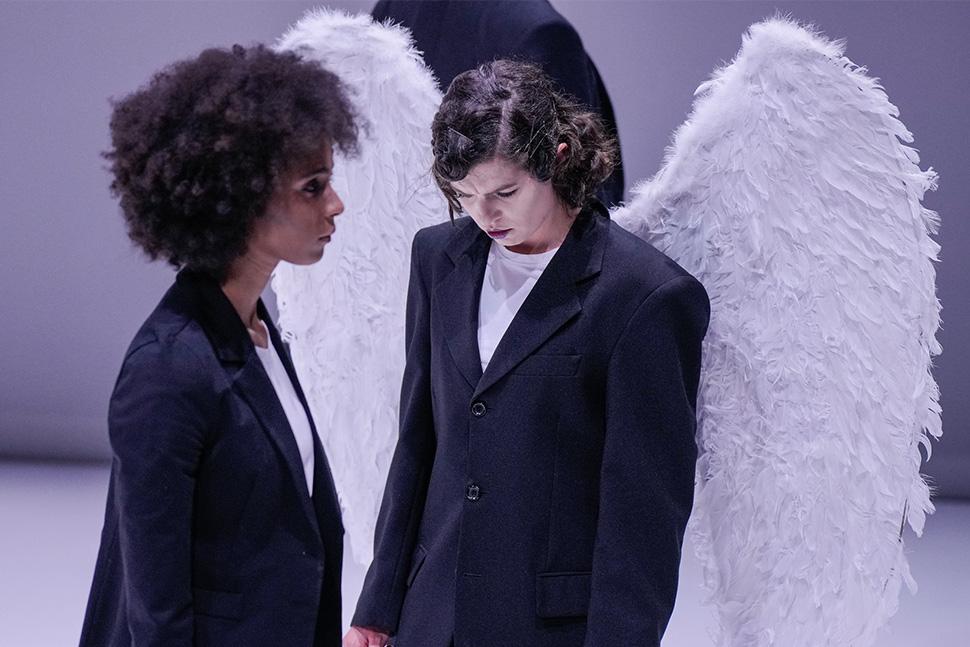
The clash between the profiteers of the canned meat market and the workers in their factories in Saint Joan of the Stockyards, a classic of Bertolt Brecht’s theatre, becomes a way of understanding where the paradigm of conflict shifts in an age that has moved beyond the concept of class struggle, yet in which inequalities persist.
Director Marco Plini writes: “The unveiling of the mechanisms of financial manipulation in the market and of capitalist arrogance, performed by a company of very young actors, can help the text resonate more clearly in the present, prompting us to reflect also on certain nuances in the relationship between capital and the individual, in which the younger generations are precisely the designated victims. But Giovanna’s naivety, if on the one hand perhaps provokes anger, on the other carries with it the twentieth-century idea that the world can be set right; this optimism is Brecht’s own, and it is the perspective we are losing in our relationship with reality.”