| Programme: | Johann Sebastian Bach, Mache dich, mein Herze, rein for English horn and strings; Erbarme dich, mein Gott, for oboe d’amore, solo violin and strings; Bach / Anton Webern, Fuga ricercata [Fugue No. 2] for orchestra; Ennio Morricone, Musica per una fine, for choir, orchestra and tape; Sarah Davachi, Chanters for organ, choir and orchestra (2026, 20’ approx., world premiere) |
|---|---|
| Choir: | Academia Alma Vox - conducted by Alberto De Sanctis |
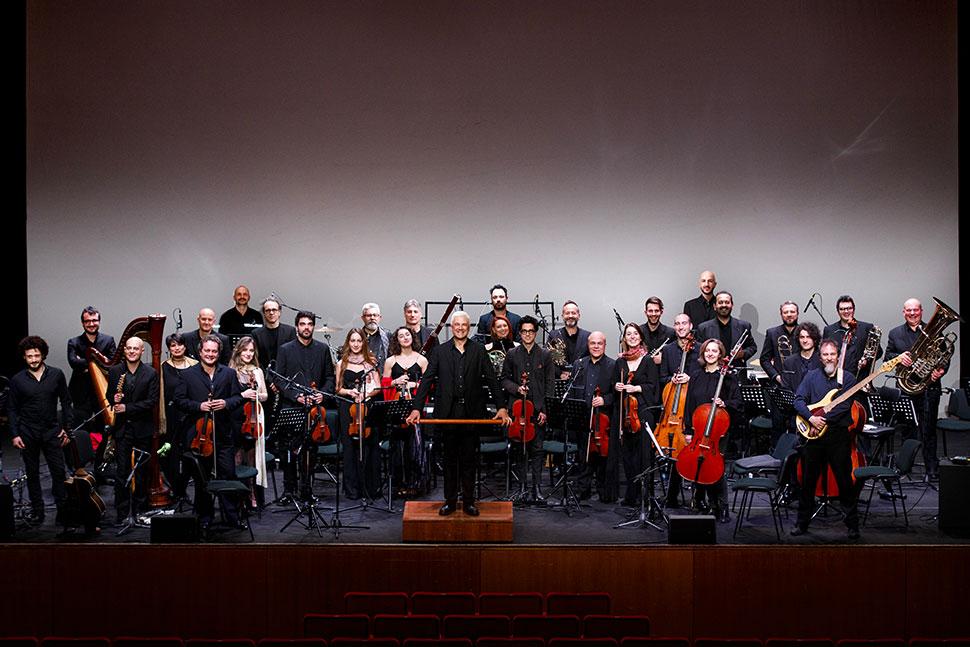
| Instrumentalists: | PMCE Parco della Musica Contemporanea Ensemble - conducted by Tonino Battista |
| Soloists: | Fabio Bagnoli, oboe; Marco Rogliano, violin; Sarah Davachi, organ |
| In collaboration with: | SZ Sugar |
Music
PMCE - Parco della Musica Contemporanea Ensemble
| Teatro Goldoni | Details |
Description
Bringing together Johann Sebastian Bach, Anton Webern, Ennio Morricone, Pier Paolo Pasolini and Sarah Davachi, this programme explores different expressions of the sublime. Erbarme dich, mein Gott and Mache dich, mein Herze, rein from Bach’s St Matthew Passion are presented in an unusual version for oboe d’amore, strings, and continuo. The programme also includes the Ricercare a 6 from The Musical Offering in Webern’s orchestration, where Bach’s contrapuntal writing is combined with Webern’s serial distribution of melodic lines across the orchestra. At the centre of the concert is the world premiere of Morricone’s Musica per una fine, a work for choir and orchestra composed in the nineties and never previously performed in public. Embedded within the score is a recording of Pasolini reciting his poem Gli italiani. For Pasolini, Bach’s music represented the highest expression of human creativity, uniting formal perfection with a profound sense of human suffering.
The concert concludes with Canadian composer and the Biennale Musica 2026 Silver Lion recipient Sarah Davachi’s new work for orchestra, chamber choir and pipe organ, Chanters, commissioned by La Biennale di Venezia. Taking as its loose point of departure the monodic structure of A chantar m’er de so qu’ieu non volria (I must sing of what I’d rather not), a medieval song by the Occitan trobairitz Comtessa de Dia (c. 1140-1212), the work seeks to find accord between vertical and horizontal modes of listening, between the textural domains of the harmonic and the melodic.