La Biennale -
La Biennale di Venezia presents the renovated Central Pavilion in the Giardini
Project funded by the Ministry of Culture as part of the PNC-PNRR, “Great Cultural Heritage Attractors” programme.
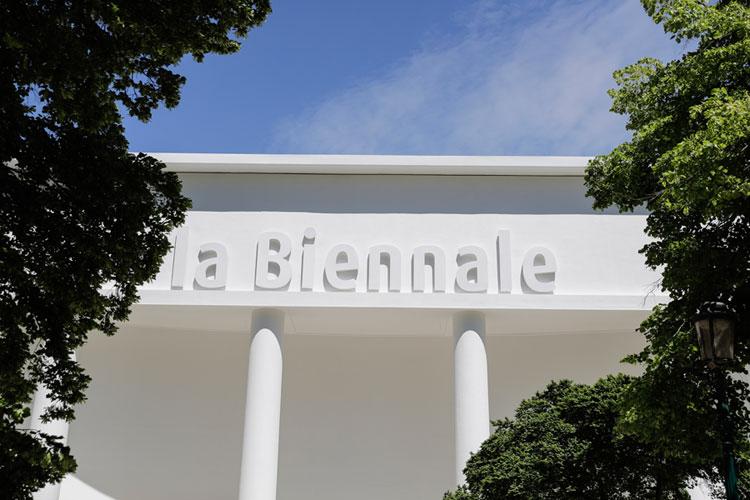
The Central Pavilion at the Giardini della Biennale
The Central Pavilion at the Giardini della Biennale was presented today following its complete renovation. The project was made possible by public funding from the Italian Government, allocated by the Ministry of Culture as part of the National Plan for Complementary Investments (PNC) of the National Recovery and Resilience Plan (PNRR), and destined for the “Project for the development and enhancement of the activities of La Biennale di Venezia for the creation of a permanent hub of national and international excellence”.
The Design development and construction documentation, as well as the permit process and the construction were completed within tight deadlines and in compliance with the milestones established by the National Complementary Plan to the PNRR.
The project is part of the Ministry of Culture’s “Great Cultural Heritage Attractors” programme and forms part of a wider programme to develop and enhance the activities of La Biennale di Venezia, which contemplates a series of interventions consisting of 22 works involving buildings and sites owned by the City of Venice, and located in the Giardini della Biennale, the Arsenale di Venezia, the Lido di Venezia, Forte Marghera and Parco Albanese (Bissuola). The works are carried out by La Biennale di Venezia and by the City of Venice, in close collaboration with the Soprintendenza Archeologia, Belle Arti e Paesaggio for the Metropolitan City of Venice, within the framework of a programme aimed at enhancing and strengthening the cultural infrastructure dedicated to the activities of La Biennale.
Construction, which began in December 2024 and was completed in March 2026, fully respected the construction schedule, which lasted 16 months in all and entailed a 31 million euro investment. The renovation of the Pavilion is one of the most complex projects in the
programme to renovate the Biennale infrastructures, both for the importance of the building and the particularly tight construction schedule.
The project was overseen by the offices of La Biennale di Venezia through its Special Projects department directed by architect Arianna Laurenzi with engineer Cristiano Frizzele, Head of the Technical and Logistics Services. The project was developed by the temporary association of professionals comprising BUROMILAN - Milan Ingegneria S.p.A (lead firm), Labics S.r.l. and architect Fabio Fumagalli for the architectural design, ia2 Studio Associato for MEP systems engineering and fire prevention, and geologist Francesco Aucone. Site supervision was entrusted to the engineer Massimiliano Milan. The open tender procedure for the construction of the works concluded in November 2024 with the award of the contract to Setten Genesio S.p.A.
Immediately following the presentation, exhibit installation will begin in the Pavilion ahead of Biennale Arte 2026, hosting the exhibition titled In Minor Keys by Koyo Kouoh, which will open to the public on May 9th and will remain open through November 22nd, 2026.
The project
Rewriting the architectural organism
The project addressed a deeply stratified building marked by a series of successive interventions, restoring it to order, hierarchy and spatial clarity. The renovation of the Pavilion goes beyond a mere functional update: it rewrites the entire architectural organism, redefining relationships, sequences and connections.
The exhibition spaces were reorganised in a clear and legible manner: the central core of the building is accessible through Sala Chini, which becomes the main distribution node. Around it unfurls a ring of service spaces for the public – bookshop, café, educational room and technical spaces – designed to be distinct from the exhibition spaces.
The exhibition spaces are neutral and flexible, veritable white boxes that can accommodate temporary installations. All the technical systems are integrated within the building envelope and hidden behind the new walls, leaving the spaces completely free. Of the historical elements that distinguish the Pavilion, special attention was dedicated to the project to refurbish the window fixtures designed by Carlo Scarpa, which have been restored and reinstalled. In addition, Sala Brenno del Giudice was redesigned based on the spatial forms of the 1928 project for the café, while the openings onto the terrace along the Canal have been reinstated.
Re-invention, not restoration
The intervention goes beyond the logic of preservation-restoration to aim at a critical re-invention of the Pavilion. Relying on a stratigraphic approach to the building’s history, the project enhanced the serial and essential nature of the architecture, preserving the memory of the different phases of construction but stripping it of all accretions and incongruous elements. The project demonstrates how re-use can be a creative act, not a nostalgic one: it
selects, orders and interprets the different phases in the history of the Pavilion to build a new architectural unity that can fulfil the contemporary needs of La Biennale.
The altane: an airy gesture that dialogues with Venice
One of the most recognizable interventions is the construction of two new outdoor structures, inspired by Venetian roof terraces, called altane, and built in correspondence with the café and the multipurpose space. These slender structures introduce an element of openness that connect the Pavilion to the landscape of the Giardini, without competing with the existing masonry mass. Built of charred laminated wood and X-LAM panels, the altane represent a conscious design gesture that sets up a dialogue with Venice and with Carlo Scarpa’s design sensibility.
The total integration between architecture, structure and MEP systems
The new architecture of the Pavilion is conceived as a unitary system in which structure, natural light, photovoltaic systems, ventilation and shading become a single organism. All the technical systems are completely concealed behind walls and roofing, freeing the spaces of any obstructions. The new skylights, made with photovoltaic glass and diffusing glass, guarantee uniform natural lighting and contribute to producing energy. Several operable modules guarantee ventilation, while motorised shades allow for complete blackout. The space remains bare, essential, flexible and efficient, where architectural quality prevails and sustainability is integrated into every element.
Improved energy efficiency
The renovation project for the Central Pavilion set the goal to obtain the LEED® (Leadership in Energy and Environmental Design) Gold certification, one of the primary international voluntary certification systems. The LEED protocol evaluates a building’s performance based on criteria of integrated sustainability: energy and water efficiency, reduction of CO2 emissions, improved environmental quality of the indoor spaces, responsible use of materials and resources, and design decisions that consider the site and context. All these strategies were applied to the Pavilion to guarantee the efficiency, sustainability and architectural quality of the exhibition spaces.
Giardini della Biennale and Central Pavilion:
the history
Located on the eastern edge of Venice, the Giardini di Castello are the historical home of the Biennale exhibitions. The area was created in the early nineteenth century as part of the urban redevelopment plan promoted by Napoleon in 1807 and designed by the architect Gian Antonio Selva. In 1895, the Giardini hosted the first International Art Exhibition of the city of Venice, an event that marked the beginning of the Biennale’s history. The success of the first editions – over 200,000 visitors in 1895 and more than 300,000 in 1899 – led to the construction of the national pavilions starting in 1907. Today the Giardini host 29 foreign pavilions immersed in nature, built in different eras. They represent a significant anthology of twentieth-century architecture, featuring works by architects such as Alvar Aalto, Josef Hoffmann, Gerrit Thomas Rietveld, Sverre Fehn, the BBPR group, James Stirling and Carlo Scarpa.
The Central Pavilion, originally named Palazzo Pro Arte, was built between 1894 and 1895 to host the first International Art Exhibition. The building arose from the transformation of existing constructions, including the Cavallerizza designed by Tommaso Meduna and the Palazzo dei Concerti at the 1887 exhibition. The project was developed by the municipal engineer Enrico Trevisanato, while the façade was designed by the painter Marius De Maria.
Throughout the twentieth century, the Pavilion was subject to numerous interventions: in 1909 Galileo Chini frescoed the dome of the octagonal entrance hall; in 1914 Guido Cirilli modified the façade; in 1932 Duilio Torres transformed the Palazzo Pro Arte into the Italian Pavilion. Numerous other projects – including those by Ernesto Basile, Daniele Donghi, Carlo Scarpa, Giò Ponti, Louis Kahn and Francesco Cellini – contributed to the architectural evolution of the building, though many of them were never built.
Originally conceived as a unitary international space, in the twentieth century the building became the Italian Pavilion, though it continued to host the great collective exhibition of La Biennale, balanced between national representation and universal vocation. With the progressive growth of the foreign pavilions in the Giardini, it maintained its role as the cornerstone of the entire exhibition.
The turning point came in 1999 with Harald Szeemann and the introduction of a model of International Exhibition as a unitary project, entrusted to a curator appointed by La Biennale, and no longer conceived as a sum of participations. From that moment on, the distinction between the central exhibition and the national pavilions became clearly defined, and the building fully assumed the role of the curator’s exhibition space – the site of an autonomous discourse, independent of the national representations. The subsequent change of its name to Central Pavilion (between 2009 and 2011) consecrated this transformation, recognising the role of the building as the heart of the international exhibition.
The area of the Giardini covers approximately 51,000 square metres, while the surface area of the Central Pavilion is approximately 5,450 square metres.
project data
Project Management and Supervision:
Special Projects Department of La Biennale di Venezia directed by architect Arianna Laurenzi
Single Procedure Manager: engineer Cristiano Frizzele, Head of the Technical and Logistics Services
Architectural Design and Art Direction:
Labics | Maria Claudia Clemente and Francesco Isidori
Fabio Fumagalli
Team Leader, Structural Design, Coordination of Safety, Sustainability and General Contract Administration:
BUROMILAN - Milan Ingegneria spa | Massimiliano and Maurizio Milan
MEP Design, Fire Prevention and Technical Systems Operations Management:
ia2 Studio | Aniello Camarca and Antonella De Martino
Landscape Design:
Stefano Olivari
Building Construction
Contractor:
Setten Genesio S.p.A.
Main Updated Financial Data
Total Project Budget: €31,000,000.00
SURFACE AREAS
Exhibition spaces 3,100 sq.m.
Support spaces 865 sq.m.
(bookshop, educational, multipurpose, café, restrooms)
Offices 40 sq.m.
Technical spaces 160 sq.m.
Staff spaces 162 sq.m.
Outdoor spaces 245 sq.m.