Music -
Biennale Musica 2026 closes tomorrow. Audiences up by 4%
Installations, Musica Libera, and the finale at Teatro alle Tese.
A Child Of Sound
The 70th International Festival of Contemporary Music, The Child of Sound comes to an end tomorrow, Saturday 24 October, with audiences up by 4%, and 40% of them arriving from abroad. For director Caterina Barbiero, that “child of sound” is the symbol of both revolution and healing, as she attributes to music a power of communion and spiritual elevation.
“A moment in Biennale Musica this year it will be hard to forget” (il manifesto) and “an experience of such intensity, such visceral emotion, that no ordinary concert, even the most highly anticipated, can ever convey” (Il Corriere della Sera): this is how the press has described Musica Libera, an event built around the therapeutic value of music which is held in the cloister of the Casa di reclusione femminile Giudecca, the women’s detention centre in Venice. Musica libera is the outcome of a series of workshops in which the women of the Institute worked together with the young musicians of Biennale College Musica and their mentors.
The long closing night on Saturday 24 October – which starts at 7 pm at the Teatro alle Tese at the Arsenale – opens with the fascinating evocative singing of Clarissa Connelly, author of Canons for eight-voice a cappella choir, in its Italian premiere; to be followed by the dialogue between acoustics and electronics with the Orchestre de nouvelles créations, expérimentations et improvisations musicales, who perform the latest works by Caterina Barbieri, Non puoi contare l’infinito for large ensemble, four voices, electronics and Ellen Arkbro, For Orchestra; finally, music reshaped by technology and globalisation with the driving rhythms of Singeli music by DJ Travella, Pili Pili, Jay Mitta.
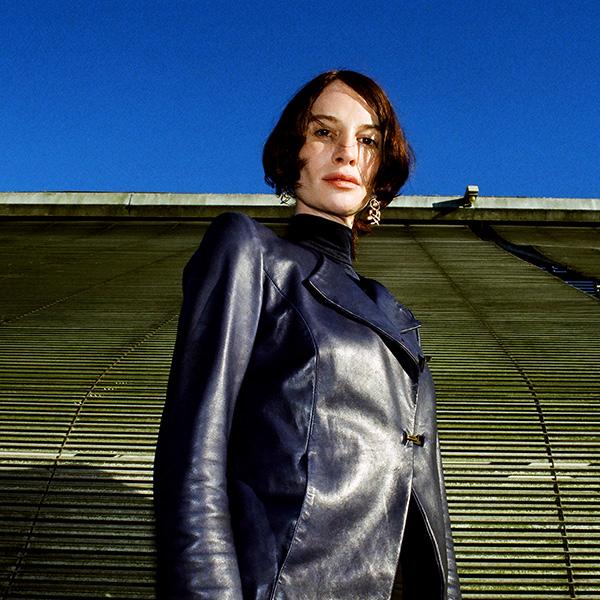
Following its performances in Denmark and Paris, Canons makes its debut in Italy at Biennale Musica 2026. The work of Copenhagen-based Scottish composer and multi-instrumentalist Clarissa Connelly, Canons is based on a series of canons, a musical technique in which a melody is successively imitated by different voices, creating gradually overlapping lines and evolving polyphonic textures. A mystical inspiration that informs many of Connelly’s works, who places the voice at the heart of stratified musical structures, creating a dreamlike synthesis between Nordic folk song, Medieval chant and digital sounds. Her songs and experimental compositions draw inspiration from literature, dreams and visionary landscapes.
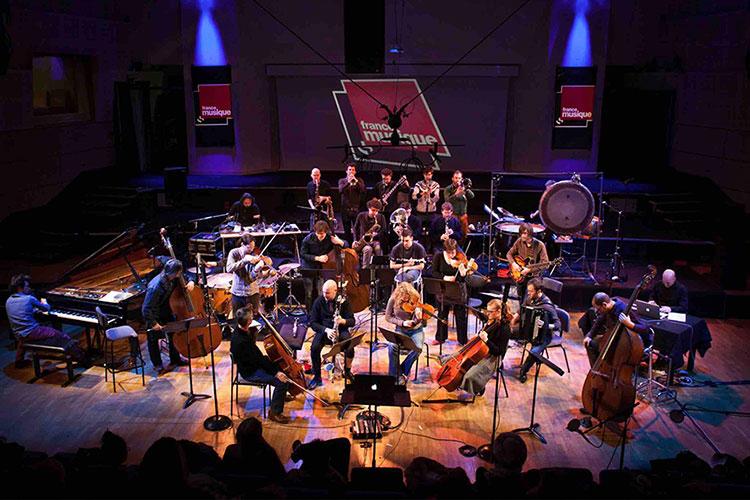
The Orchestre de Nouvelles Créations, Expérimentations et Improvisations Musicales, founded in Paris in 2011 by the composer and director Frédéric Blondy and dedicated to contemporary experimental electroacoustic music, will be at the Biennale with its 35 musiciansd. A creation for orchestra by Ellen Arkbro, a piece at the intersection of traditional acoustic instrumentation and electronic expansion, written music and improvisation, and Non puoi contare l’infinito for large ensemble, four voices and electronics, commissioned to Caterina Barbieri by the Philarmonie de Paris.
One of the leading figures in the renewal of minimalism that has taken place over the past decade, Ellen Arkbro delves deeper into her exploration of harmonic sound and its transcendental qualities. Arkbro, who has also studied and practiced voice and organ (primarily Renaissance) works on the basis of the principles of natural intonation. In For Orchestra in particular, she creates an orchestral environment in which listening is conceived as an active process working with long-duration harmonic structures that invite the audience to gradually immerse itself into the evolving qualities of harmonic sound.
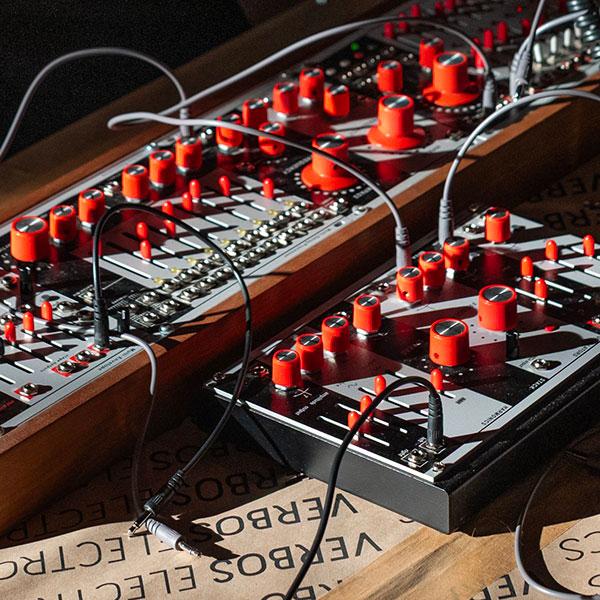
Non puoi contare l’infinito extends into the orchestral domain the generative and semi-aleatory techniques developed by Caterina Barbieri in her work with electronic music and analogue synthesisers. At its core lies a harmonic matrix originally programmed on an analogue sequencer. Structured in two acts, the composition explores themes of birth and separation, tracing the passage from unity to difference, and from the infinite to the finite.
Singeli music represents the effervescence of the hyper-contemporary Tanzanian scene: a language born on the margins of mainstream which has become the expression of a genuine cultural movement. Exploding over the past decade in the working-class neighbourhoods of Dar es Salaam and along the Tanzanian coast, it is considered one of the fastest types of electronic music in the world. Made with essential instrumentation – laptops, mouse and Bluetooth connections – in contrast with the sophisticated setups of the djing culture, Singeli is characterised by head-spinning rhythms, endless digital beats and lyrics in Swahili steeped in social criticism. Some of the protagonists of this scene come to Venice for a unique evening: DJ Travella (Hamadi Hassani), Jay Mitta and Pili Pili, an all-girl formation with Anti Vaias, Kadilida, Nana and DJ Zai.
The programme of Saturday 24 October
11 am > 6 pm Laboratory of the Arts (Ca’ Giustinian) Wyldie Bracewell Two things in the world seem to be only once installation
11 am > 6 pm Sala d’Armi E (Arsenale) Heaven Is Ours / O Céu É Nosso installation
11 am > 6 pm Sala d’Armi E (Arsenale) Arcadia. A sonic playground interactive installation
4 pm Casa di reclusione femminile Venezia Giudecca Musica Libera Biennale College workshop (60’)
7 pm Teatro alle Tese (Arsenale) Clarissa Connelly Canons (45’); ONCEIM (Orchestre de nouvelles créations, expérimentations et improvisations musicales) music by Ellen Arkbro (30’) and Caterina Barbieri (35’); Jay Mitta, Dj Travella and Pili Pili Girls Singeli Spirit (120’)
Tickets may be purchased online (www.labiennale.org) and in the Biennale ticket offices: Ca’ Giustinian (10 am > 5 pm every day), Infopoints at the Giardini and the Arsenale (Tues > Sun 11 am – 6:30 pm), one hour before the beginning of performances at the dedicated ticket office at the Arsenale.
Free return shuttle service:
from the Arsenale (Tese Gru) to S. Elena, San Zaccaria/San Marco, Zattere and Piazzale Roma. The shuttles will be available at the end of the concert with Clarissa Connelly, Onceim, Jay Mitta, Dj Travella and Pili Pili Girls.