Dance -
Biennale Danza 2026: Time Does Not Exist
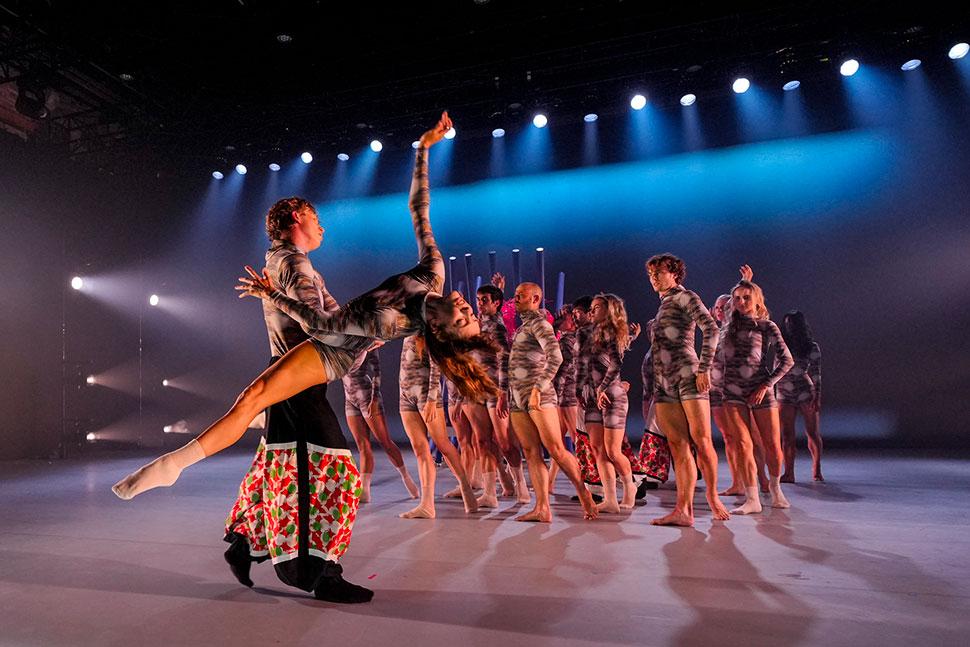
From July 17th through August 1st, the 20th International Festival of Contemporary Dance features 150 artists for over 60 events and a programme consisting entirely of new works: 9 world premieres, 3 European premieres, and 8 Italian premieres.
Time Does Not Exist
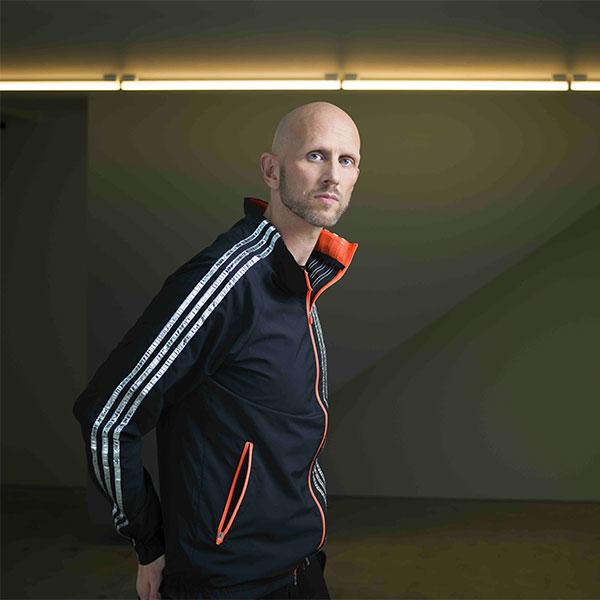
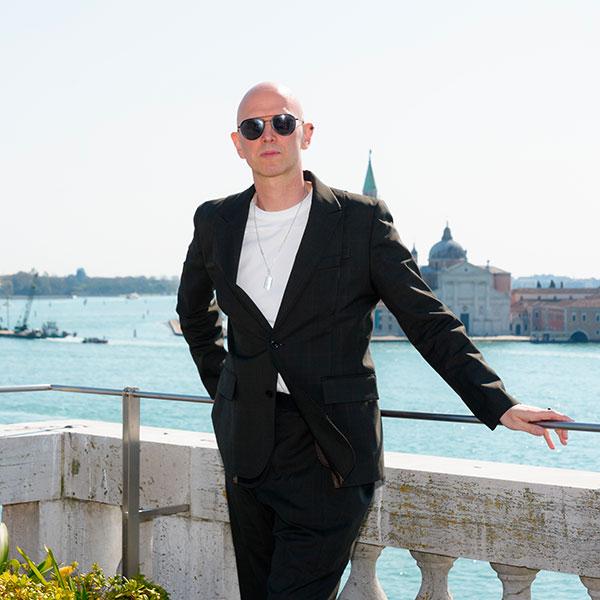
Taking place from July 17th through August 1st, the 20th International Festival of Contemporary Dance directed by Sir Wayne McGregor is titled Time Does Not Exist, inspired by the theories of the physicist Carlo Rovelli. “Rovelli’s ideas on the non-linearity and multiplicity of time – writes McGregor – have been at the forefront of my mind as I immerse myself in the history of Biennale Danza, which will mark its twentieth ‘official’ birthday in 2026. Systematically and chronologically revisiting the legacy, I reach back into the archive, attempting to rewind and reflect, extracting from history the figures, facts, and narratives of the past. An ephemeral jigsaw emerges, offering only a shadow of the embodied experiences of yesterday, but nonetheless one that I am grateful to touch. Again and again, the dancers, the choreographies, the concepts, the photographs, the artefacts, the knowledge, the intelligence coalesce, overlap, and superimpose out of time and out of sync with everything that surrounds it. This living archive creates a non-manifest body with a consciousness beyond—much wider than our self.
Then I realise that time does not exist and in some fundamental way, dance artists have always understood this, inviting us to feel a sense of wonder and curiosity about the nature of reality.
The artists in Biennale Danza 2026 are like (and unlike) our past dance time travellers who, in their own unique ways, explore and depict multiple timelines, perspectives, and realities through their work… This profound exploration of time, or rather a time that does not exist, at Biennale 2026 profoundly engages with themes of memory, identity, and existence, encouraging our audiences to reflect on and perceive their connection with their own lifetime – an invitation to changing relationships and states”.
Over 150 artists for over 60 events across the span of two weeks (17 July > 1 August) and a programme consisting entirely of new works: 9 world premieres, 3 European premieres, 8 Italian premieres. New works that express the evolution in the languages of dance, impelled by the urgencies of our time, languages regenerated by the vital energy of the cultures of origin of many of the artists present, deeply connected to the rhythms, landscapes, symbols and histories of other traditions channelled by the body. But the greatest success is the dense network of productions and coproductions initiated over the years by Biennale Danza, primarily by selection, renewing its commitment to the younger generations: 695 applications have been submitted for the calls promoting new choreographies nationally and internationally, along with 358 applications to participate in Biennale College Danza.
The programme
From the First Nations of Australia to South Africa, the Lions of Biennale Danza 2026 bring to Venice the Bangarra Dance Theatre (Golden Lion for Lifetime Achievement), the first company consisting entirely of Australian Aboriginal dancers, and the dancer, choreographer, director and activist Mamela Nyamza (Silver Lion) with her eponymous company. Both ensembles will make their debut with two European premieres: respectively Terrain (trailer), choreographed by Frances Rings, a production that evokes the power of the body and the earth, inspired by the timeless beauty of the largest salt lake in Australia, the Kati Thanda-Lake Eyre, and The Herd/Less (trailer), a work about the ambiguity of a wonderful world that evokes violence and vulnerability exploring the dual meaning of “herd”: the symbol of collective harmony, but also of control and submission.
A highly anticipated return to Venice and to the Biennale is that of Emanuel Gat, a leading figure in Israeli dance and one of the most beloved choreographers in Europe, where he has been based, in France, for twenty years. Five Days in the Sun (trailer), set to Mahler’s Fifth Symphony, is the new work that this artist, whose pure choreographic lines are modeled on musical composition, reserves for Venice together with a new ensemble of twelve dancers.
History and traumas are inscribed in the memory of the body with two artists who turn choreographic practice into a contemporary, poetic, political gesture. In its Italian premiere performance, What is War delves into the marks left by war on the body and the collective memory of the generations to come. On stage Eiko Otake, trained in Japan by the butoh masters Kazuo Ohno and Tatsumi Hijikata, who has worked in New York since 1976 and has presented her multimedia works around the world, and Wen Hui, the charismatic pioneer of modern dance in China, where in 1994 she founded the first independent company outside the state system, in Beijing, and is currently based in Frankfurt. Between new wars and global crises Wen Hui and Eiko Otake remind us how fragile, and how precious, every individual life is.
The body as a form of historical, social and political documentation is also expressed in Làhppon / Lost (trailer) by choreographer and director Elle Sofe Sara, who finds her wellspring of creative energy in the Sami culture and in the totalizing nature of her native Fennoscandia, where Norway, Russia, Finland and Sweden meet. The work echoes and refracts in the present a critical episode in Sami history, the Kautokeino rebellion (1852) against the Norwegian authorities and the practices of forced assimilation, to reflect upon the human mechanisms of fear, injustice and hope. For the first time a Lappish artist, Elle Sofe Sara, together with the Icelandic choreographer Hlín Diego Hjálmarsdóttir, directs 19 of the 70 dancers in the corps de ballet of the Oslo Opera House, making their debut last year on the main stage.
Searching for a vocabulary that connects bodies and history, the children of the diaspora to their places of origin, the Franco-Malagasy choreographer Soa Ratsifandrihana, who studied with De Keersmaeker and Charmatz before founding the Kintana company in Brussels last year, literally strips away every academic tradition to reinvent her own buried roots. Fampitaha, fampita, fampitàna (trailer), which premieres in Italy, develops a collective approach to choreography, establishing a dialogue with narrative and music, together with four partners, three dancers and a musician, who represent the diaspora from Haiti, Martinique and Guadeloupe.
Omar Rajeh, a central figure in the diffusion and development of contemporary dance in Lebanon and in the Arab world, equally renowned in Europe where he has been based in Lyon since 2020, brings his latest work, Dance People (trailer), to the festival. Considered a milestone in an artistic career that dismantles hierarchies and power structures which standardise and discipline the body, Dance People asserts the aggregating and community-building value of dance, making it an act of highly political significancea. Rajeh reinvents theatre conceiving it as a shared territory of which the spectator is an integral part, free to move and shape the show together with the dancers. From an aesthetic of watching to an aesthetic of participation. Because Dance People is not a show to contemplate from afar, but a gesture to share, a space to inhabit.
The ephemeral art of dance, which is born, dies and perpetually renews itself within the circumscribed space of a gesture, is at the centre of the work of several companies invited to Biennale Danza.
Text, movement and hypnotic stage illusions in which time reverses, gravity disappears and the laws of nature dissolve, Tempo (trailer) is the creation of Finnish artist Kalle Nio, who merges visual theatre, experimental cinema, contemporary circus and new magic, together with the Brazilian choreographer based in Sweden Fernando Melo. The Slovenian dancer and puppetmaster Barbara Kanc, the Italian dancer Luigi Sardone and the Swedish dancer and acrobat Winston Reynolds move across a landscape between dance, theatre and acrobatics.
The winner of the national call for a new choreography, Andrea Salustri draws from a transdisciplinary background that he puts to work in his productions, in which he shapes a world of objects to manipulate, transform and accompany with his body to reveal their secret vitality. After Materia, a pas-de-deux between body and object that fascinated the audiences of Biennale Danza 2023, in Invisible (trailer) Salustri focuses on the intangible agents – air, light, smoke, wind, fog – to explore whether dance can be a way, for even just a moment, to make the invisible visible.
Winner of the international call, Oli Mathiesen, a New Zealander of Maori origin, moves across various disciplines – dance, theatre, cinema – in his practice as a performer and choreographer. In Venice he will present Just Between Me and Jesus, a work inspired by the clubbing culture and the liturgy that underpins it, with seven New Zealand (Aotearoa) dancers, highlighting shared rituals, devotion and a sense of belonging in an expression of collective euphoria.
Featured are many leading figures in dance from every part of the globe:
Adam Linder, an Australian working between Los Angeles and Berlin and the author of works that have been presented in theatre and exhibition spaces such as the MoMA in New York, previously appeared at the Biennale with the Sidney Dance Company. He returns to Venice with Drip Tekhne (trailer), conceived in close connection with the ten performers, in residency at the Royal Opera in Copenhagen, Dansk Danseteaters: an exploration of the evolution of the process that led our bodies to become technical instruments of dance.
Winndance, an acronym for When if Not Now, is a stellar gathering, a new ensemble from Stuttgart that brings together the finest names in dance over the age of forty and leading authors: John Neumeier, who rewrote the history of contemporary ballet with Kyliàn and Forsythe, with whom he trained at the school of Cranko, Imre and Marne von Opstal, associated choreographers at the Nederlands Dans Theater, following a lengthy career with the finest companies in the world, Rainer Behr, who worked with the masters of Tanztheater Susanne Linke and Pina Bausch, Javier de Frutos, one of the most influential Latin-American choreographers working in Europe, Omar Román de Jesús, the internationally renowned exponent of Puerto-Rican choreography. They will present the world premiere of Scirocco (trailer), two chapters in a dialogue: Death in Venice and Bridge of Sighs. The world class performers include Diana Vishneva, Silvia Azzoni, Kayoko Everhart, Mara Galeazzi, Silas Henriksen, Igone de Jongh, Marijn Rademaker, Oleksandr Ryabko, and Gil Roman.
The history-making American dancer and choreographer Molissa Fenley will be in Venice in a triple role. First and foremost as the author of the cult piece State of Darkness (trailer), a single dancer contending with an entire orchestra in Stravinsky’s Rite of Spring seen under a new light, in a performance by Cassandra Trenary, formely a prima ballerina with the American Ballet Theatre and now with the Wiener Staatsoper. Then as the author, and exceptionally once again as the performer of Bardo, the solo she conceived for Keith Haring on the tenth anniversary of the death of the artist, whom she valued as a friend, collaborating with him on several projects together. In the Tibetan tradition “bardo” indicates the liminal space between death and rebirth. Finally Molissa Fenley will be a mentor for the sixteen young dancers and two choreographers of Biennale College, for the production of a new creation that will have its world premiere at the festival.
Biennale College Dancers and Choreographers
Bringing young talents in contact with the great masters of dance, engaging with learning, training, mentoring, creation, is the heart of Biennale College. After Crystal Pite, William Forsythe, Xie Xin, Saburo Teshigawara, Simone Forti, Wayne McGregor himself, Cristina Caprioli and Sasha Waltz, once again the sixteen young dancers from around the world and the two young choreographers will be in residence at Biennale Danza 2026, participating in classes, workshops, repertory works and vitally, creating new works, guided this year by Molissa Fenley and Maxine Doyle.
Maxine Doyle is an independent choreographer and director. Since 2002 she has been a director-choreographer for Punchdrunk, with whom she co-directed the multi-award-winning Sleep No More (London, Boston, New York, Shanghai). As McGregor writes: “ Both singular artists are powerhouses of imagination, experience and innovation, and we are thrilled to be coommissioning two new works specifically for the dancers of Biennale College 2026”. In addition, the two young choreographers selected through the call will create and present world premieres at Biennale Danza 2026, guided by Wayne McGregor and his team.
20 years of the Festival
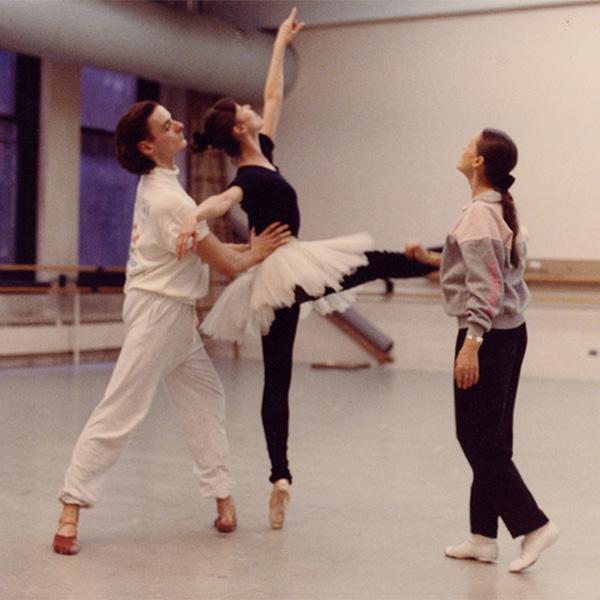
Celebrating the twentieth edition of the Festival, Biennale Danza, created as an independent department twenty-eight years ago, tells its story in an exhibition, Life Lines, created in collaboration with the Historical Archive of La Biennale – ASAC. Through film, photographs, text, documents, objects and talks, this exhibition Life Lines “will captivate, inspire, and remind us that the body is a living archive, and the living archive is itself a body”.
Like every year, the Festival will hold laboratories for specialists that are also open to the public, featuring many of the guest companies and choreographers. Encounters and conversations that will bring the public closer to the programmed performances.
The spaces
This year again, the live performance arts festivals will involve the assigned spaces in Venice and other new ones, and will extend to Mestre and Marghera, involving the territory of the Venetian mainland in its most vital areas.
Shows, concerts and many of the events in the programme will take place in the unique spaces of La Biennale di Venezia at the Arsenale (Teatro alle Tese, Tese dei Soppalchi, Sale d’Armi, Teatro Piccolo Arsenale); in the headquarters at Ca’ Giustinian; in the historic theatres of the city, Malibran and Goldoni.
A new feature this year is the presentation of a Biennale Teatro concert production (Cries by Christos Stergioglou and Alex Drakos Ktistakis) at the Teatro Verde on the Island of San Giorgio Maggiore, the splendid open-air amphitheatre restored to the city by the Fondazione Giorgio Cini in 2022. Whereas the play by Davide Iodice, Promemoria, will be performed in the places in which it was created, at the Centro Servizi di San Giobbe with its residents. Like last year, the opening of Biennale Musica will feature an ensemble of young guitarists winding their way through the streets and squares of Venice, while other events will be hosted at Forte Marghera and the Parco Albanese in Mestre, spaces that are now part of the city’s cultural landscape.
Educational
Over time, La Biennale di Venezia has developed a strong commitment in the field of education with their Educational activities, addressed to the audiences of the Dance, Music and Theatre Festivals. They have worked with universities, schools, families, a public of enthusiasts and the merely curious, involving over 68,000 people in more than twenty years.
All the initiatives are aimed at actively involving the participants and are led by professional staff members selected and trained by La Biennale. They are divided into workshops, open classes, interdisciplinary activities, interactive learning initiatives.
podcast
La Biennale on Air is the official podcast of La Biennale di Venezia, launched in September 2025 and available on the major platforms (Spotify, Apple Podcasts, Amazon Music, YouTube) and on La Biennale di Venezia’s website.
The new March 2026 episode will be available starting on Wednesday, March 25th and will feature contributions from Mamela Nyamza and Sarah Davachi, the Silver Lions of Biennale Danza 2026 and Biennale Musica 2026, and Emma Dante, recipient of the Golden Lion for Lifetime Achievement for Biennale Teatro 2026, Laurie Anderson, American artist and musician invited to the Biennale Arte 2026, Mona Fastvold and Amanda Seyfried, respectively the director and lead of the film The Testament of Ann Lee, presented at the 82nd Venice International Film Festival.
Catalogues
The official catalogues of the 54th International Theatre Festival, the 20th International Festival of Contemporary Dance and the 70th International Festival of Contemporary Music are published by La Biennale di Venezia and edited by the Directors of the three Departments. The three catalogues will explore the themes, protagonists and productions of each Festival and feature critical essays, images and original illustrations.
The graphic identity of the Dance Music and Theatre Department is designed by studio Headline in Rovereto, as is the layout of the catalogues for Biennale Danza 2026. The layout of the catalogue for Biennale Musica 2026 and Biennale Teatro 2026 is designed by Studio Tomo Tomo in Milan.
La Biennale di Venezia’s commitment to environmental sustainability
Since 2021, La Biennale di Venezia has launched a plan to review all of its activities in light of recognized and consolidated principles of environmental sustainability. From 2022 to 2024, La Biennale has obtained carbon neutrality certification in accordance with the PAS 2060 standard for all its events held throughout the year, thanks to data collection on the sources of CO₂ emissions generated by the events themselves and the implementation of consequent measures. For the year 2025, the goal was to obtain certification for the calculation of the carbon footprint, in accordance with the new ISO 14067 standard, for all of La Biennale’s scheduled activities. In this sense, La Biennale will engage again in 2026 in a communication campaign to raise the awareness of the participating public.
thanks
Our thanks to the Italian Ministry of Culture for its important contribution and to the Veneto Region for its support of the programmes in the Dance Music and Theatre Sectors of La Biennale di Venezia.
Media partner of the Dance Music and Theatre Sectors is once again Rai. Through its information channels and Rai cultura - in particular the TV channel Rai 5 and Radio3 – the various activities taking place in Venice will be described and offered to the public.
Our consolidated collaboration continues with Vela – Venezia Unica, a commercial company of the City of Venice specialized in mobility and marketing, with an agreement of reciprocal promotion and visibility.
We thank the following for their collaboration: Comune di Venezia, Fondazione Forte Marghera, Fondazione Teatro La Fenice, Teatro Stabile del Veneto “Carlo Goldoni”, Fondazione Giorgio Cini, Centro Servizi San Giobbe, I.P.A.V. Istituzioni Pubbliche di Assistenza Veneziane.