A mother –a woman who emigrated to Greece from Albania– together with her husband and children. The first part of Banushi’s trilogy, staged in an Athenian apartment during the lockdown, now recreated specifically for the Biennale.
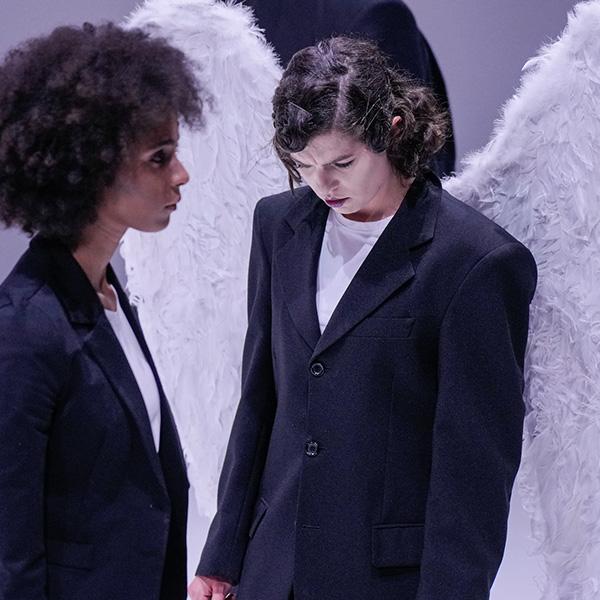
A classic of Brecht’s theatre becomes a way of understanding where the paradigm of conflict shifts in an age that has moved beyond the concept of class struggle, yet in which inequalities persist.
A mother –a woman who emigrated to Greece from Albania– together with her husband and children. The first part of Banushi’s trilogy, staged in an Athenian apartment during the lockdown, now recreated specifically for the Biennale.
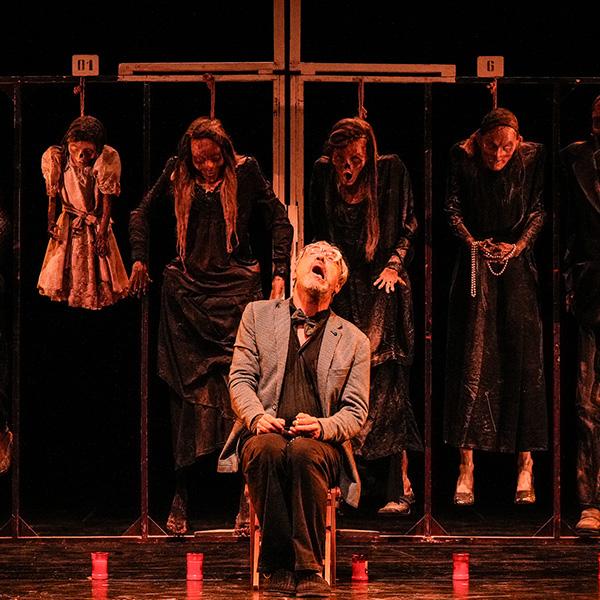
This new work draws on the imaginative and baroque universe of the Neapolitan writer Giambattista Basile, whose pièces Emma Dante has previously brought to the stage.
Mario Banushi - Taverna Miresia. Mario, Bella, Anastasia.
The final chapter of the trilogy by Mario Banushi, in which the neon sign of a restaurant in a suburb of Tirana (or Athens, in this staging) casts light on the story of a family.
A classic of Brecht’s theatre becomes a way of understanding where the paradigm of conflict shifts in an age that has moved beyond the concept of class struggle, yet in which inequalities persist.